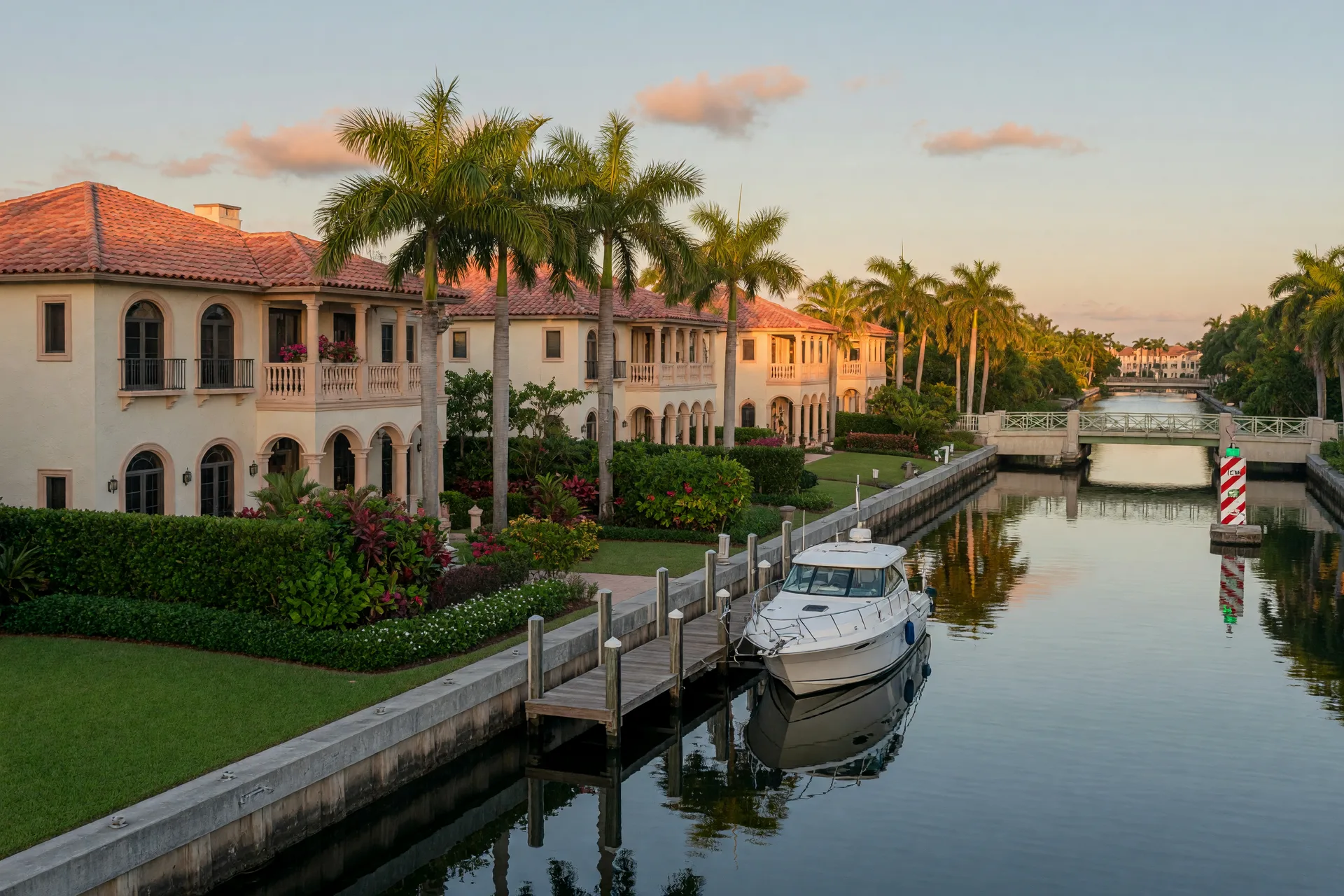
Buying a luxury home or condo in Boca Raton rewards preparation in a way few other markets do. The difference between a smooth closing and a stressful one usually comes down to a short list of documents, numbers, and questions you raise before you ever make an offer. Here is the primer I give every buyer on the first call.
- Read the governing documents before you fall in love
Every gated community, country club, and condo association in Boca Raton operates on its own rules, and the documents tell the real story. Rental policies, pet rules, architectural review, age requirements, and leasing caps all vary widely. My standing advice is to request the declarations, bylaws, and rules before writing an offer, and to read them with the same care you gave the floor plan.
The documents also reveal the community's financial culture. Look at how the budget balances essential upkeep against discretionary amenities, whether routine maintenance is funded or quietly deferred, and exactly how a special assessment gets triggered. Ask whether the board has amended the rules recently in ways that affect owners, because a change to rental caps or pet policy can quietly reshape whether a home fits your life. In country club communities, membership structure matters as much as walls and roofs: some clubs bundle golf and social membership into ownership, while others require a separate initiation and an annual commitment. Clarify precisely what stays with the home and what you purchase separately, and have your attorney put the answer in writing before you commit.
- Condo buyers: the association's health is the hidden price
For condos, the association is the building's landlord, its insurance buyer, and its repair budget. Ask about the reserve fund, the most recent reserve study, the master insurance policy, and whether any special assessments are planned. A building with healthy reserves and current insurance is a genuinely different purchase than an identical one quietly deferring its roof. Florida has also made structural inspections a routine part of condo governance for aging coastal towers, so for any building more than twenty-five years old, ask directly whether its milestone inspection is complete and whether any concrete restoration is planned or funded.
Learn to read a reserve study the way you would read a title report: it is the building's honest accounting of what it owns and what it owes. A well-funded reserve with a current study means fees stay predictable and surprises stay rare. A thin reserve paired with an aging roof, elevators, pool deck, or seawall is a question of when, not whether, a special assessment arrives. In full-service oceanfront buildings, the monthly fee also covers staffing, security, and amenities, so weigh the fee against what it actually buys. Pay attention to the board as well: well-run buildings document their work, publish minutes, and maintain the property with visible pride. Sitting in on one board meeting, even virtually, often tells you more than any financial statement.
- Price insurance into the real budget
Florida property insurance is a line item you cannot defer, and luxury homes feel it most. Premiums vary sharply with elevation, distance to the coast, roof age and material, and mitigation features such as impact glass or a fortified roof. A trusted local insurer can quote before you make an offer, and I always recommend a wind-mitigation inspection early in the process. Two homes on the same street can carry very different premiums, so never assume a figure from a friend's policy or a previous address will transfer. Quote the actual property, with its actual roof year and mitigation features.
Waterfront buyers should treat flood insurance as a separate conversation from wind coverage. Flood risk follows the flood maps, not the neighborhood reputation, and two adjacent homes can sit on opposite sides of a line. Ask for the elevation certificate, identify which flood zone the home sits in, and understand what the association's master policy covers versus what you will carry personally. In newer construction, raised living areas and concrete construction have meaningfully improved insurability; in older homes, the roof, the windows, and the electrical panel are where an underwriter looks first. Build insurance into the offer math rather than treating it as a closing afterthought, because it affects what you can finance and what you will pay every year you own the home.
- Financing luxury property takes lead time
Whether you are buying with a mortgage or in cash, prepare early. Luxury transactions move on schedules set by lenders, appraisers, and title offices, and out-of-state buyers add document time on top of that. Get pre-approved with a lender experienced in Florida purchases, plan fund transfers well ahead of closing, and keep your timeline loose enough to absorb one surprise.
Lenders underwrite luxury property with extra care. Appraisals must support the contract price, jumbo financing carries deeper requirements than conventional loans, and coastal condo lending adds another layer entirely, because lenders review the building's insurance, reserves, and owner-occupancy ratio before they will lend in it. If a building is not on the lender's approved list, financing can stall even after a signed contract. A lender who knows the coastal condo market flags these issues early, and a pre-approval from that lender makes your offer stronger when competition is real. International and out-of-state buyers should allow extra weeks for identity checks, funds sourcing, and any currency transfers: the paperwork is routine, but it does not like to be rushed.
- Hire a local team before you need one
A buyer's agent who knows the exact building or street, a Florida real estate attorney for the contract, a licensed inspector with coastal experience, and a wind-mitigation specialist: this is the team that protects you. Each one is inexpensive relative to what it prevents.
Build the team before you make an offer, not after one is accepted, because Florida contracts move quickly and several protections have strict deadlines. Your agent should know the history of a specific building, the rhythm of its sales, and the honest differences between one street and the next. The attorney reviews the contract, the inspection clause, and the closing documents with your interests in mind. The inspector looks beyond the obvious: roof condition, water intrusion, aging systems, and the subtle ways coastal living marks a home. If the property touches the water, add a survey of the property lines and a seawall or dock condition report. Together they turn a beautiful listing into an informed decision.
- Understand the true cost of ownership
Beyond the purchase price, luxury ownership in Boca Raton includes association fees, property tax, insurance, and a realistic maintenance allowance for a coastal climate. When I prepare a buyer for an offer, we run that full picture together, so the number that matters most, the monthly cost of actually living in the home, is known before any documents are signed.
The coastal climate is the quiet third owner of every home here. Salt air, sun, and humidity all take their toll at their own pace: exterior paint and finishes, air conditioning, pool equipment, and the seawall or dock if there is one. Budget for upkeep the way you would for a classic car, because the homes that age gracefully are the ones whose owners planned for them. On the tax side, Florida's rules include homestead protections for full-time residents who apply, and the county's public records show what the current owner pays today, a strong starting point for modeling your own figure. Adding association fees, insurance, taxes, maintenance, and utilities into one monthly picture before you negotiate the price is what separates a purchase that wears well from one that surprises.
- Questions worth asking before an offer
- When was the roof last replaced, and what wind-mitigation rating does it carry?
- What are the current association fees, and when is the next budget review?
- What is the rental policy, and does it match how you plan to use the home?
- Which schools serve this exact address, and how stable is that zoning?
- What does the flood zone require, and what does the master policy cover?
- Are special assessments planned or funded, and how deep are the reserves?
- In a country club community, what membership comes with the home and what is separate?
- What is the building's owner-occupancy picture, and how do comparable units finance today?
Buying well in Boca Raton is a sequence of small, honest answers collected in the right order. You now know the questions, and none of them are complicated once you know where to look. If you would like help working through the documents, the numbers, and the checklist above for a specific home or building, I would be glad to walk through them with you. Reach out through the contact page and tell me what you are considering; the conversation costs nothing, and the clarity it brings makes the whole search lighter.