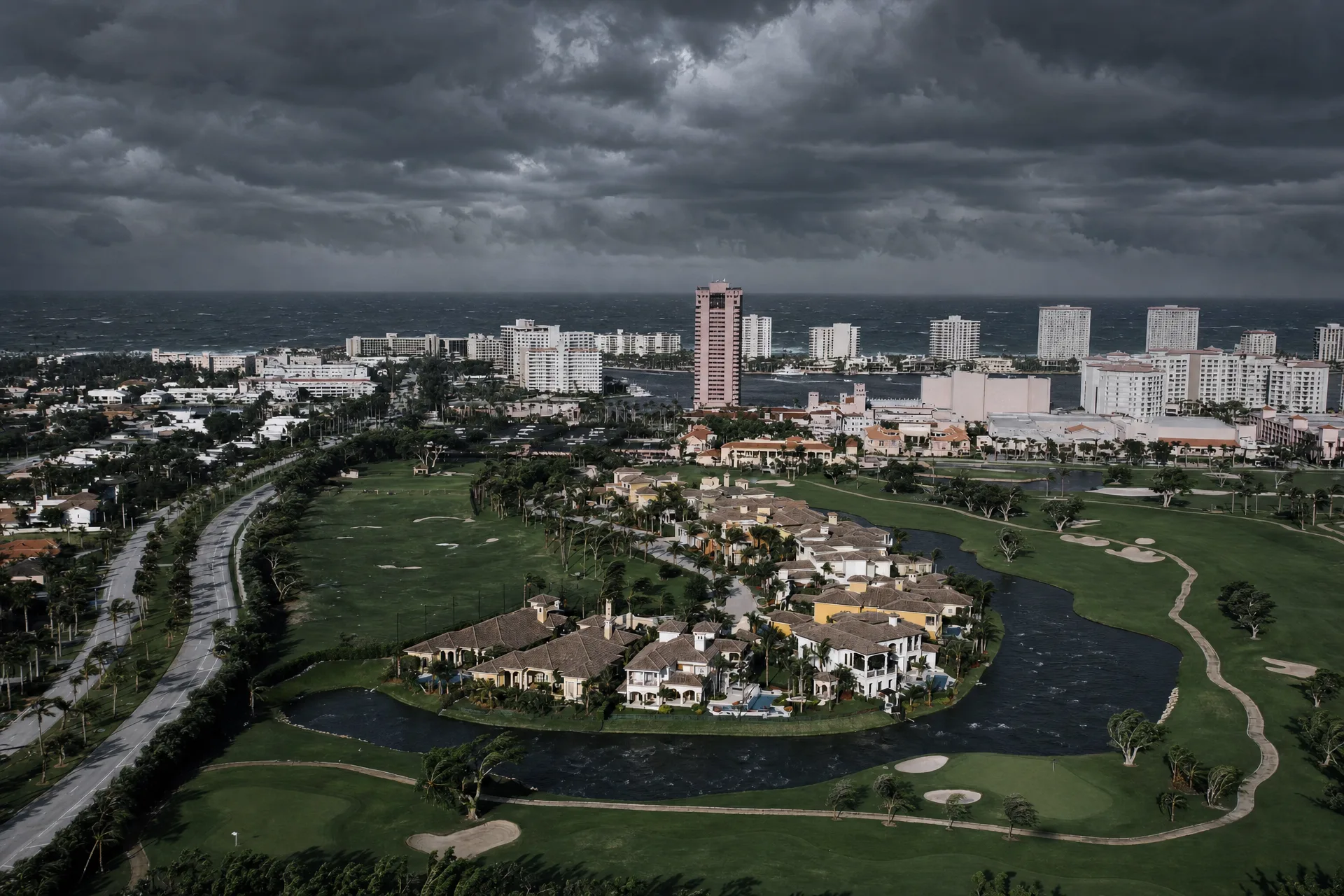
When a storm threatens Florida, the phrase "state of emergency" lands in headlines within hours. It sounds dramatic, but for residents it is best understood as a formal administrative tool: a legal signal that lets the state and its counties move resources, coordinate response, and prepare before a storm arrives. This post explains what that declaration actually is, how it worked during Hurricane Irma and Hurricane Milton, what the standing declaration in effect today means, and what you should do when one is active. The same guidance lives on the hurricane safety page, which is the page to bookmark for storm season.
What a state of emergency actually is
A state of emergency is not a prediction, and it is not a report that something has already happened. It is a legal declaration issued under the Florida Emergency Management Act, found in Florida Statutes section 252.36, that formally activates the state's emergency management powers. When the Governor signs an executive order declaring a state of emergency, state agencies can move personnel, supplies, and equipment where they are needed, suspend rules and procedures that would slow a response, and position resources ahead of a storm. The declaration also opens the door to federal assistance, including the Major Disaster Declaration process that funds recovery after the storm.
For a resident, the practical meaning is simpler: the machinery of government is switching into storm mode, and the days before landfall are the ones that matter most. A declaration does not mean you must do anything differently today, but it is a clear signal to finish your plan, check your supplies, and pay close attention to official sources.
Declarations exist because storms do not respect administrative calendars. The Florida Emergency Management Act gives the Governor a single legal instrument that can be signed in minutes and takes effect immediately, which is exactly what a storm threat requires. It lets the state pre-position supplies, coordinate with county emergency managers, request mutual aid from other states, and begin the paperwork that federal disaster assistance depends on, all before the first band of weather arrives. That speed, more than any single power, is the point of the declaration.
How the sequence worked during Hurricane Irma, 2017
Hurricane Irma is the clearest recent example of the whole sequence playing out from the statehouse to your county. On September 4, 2017, Governor Rick Scott declared a state of emergency for all 67 Florida counties under Executive Order 17-235, later extended by Executive Order 17-287. The statewide scope reflected how large and uncertain the storm was. At that point no one knew exactly which coastline would take the worst of it, so the declaration gave every county the same legal footing to prepare.
Two days later, on September 6, 2017, Palm Beach County declared its own local state of emergency, the county-level step that activates local emergency operations and gives the county the authority to order evacuations and open shelters. After the storm passed, the county was later included in FEMA Major Disaster Declaration DR-4337, which unlocked federal assistance for recovery. The lesson in the sequence is that declarations layer: the Governor's order creates the statewide framework, the county's order activates the local response, and the federal declaration funds the recovery.
The modern playbook: Hurricane Milton, 2024
Hurricane Milton showed the same layered system moving at speed. On October 5, 2024, Governor Ron DeSantis issued Executive Order 24-214, declaring a state of emergency for 35 counties, including Palm Beach, Broward, and Miami-Dade. The next day, Executive Order 24-215 amended it to cover 51 counties, widening the preparation window as the forecast shifted.
The counties moved in parallel. Miami-Dade declared a local state of emergency on October 6, 2024, and Broward County declared its own local state of emergency the same week. Palm Beach County issued its Hurricane Milton Evacuation Order on October 9, 2024, telling residents in the mapped evacuation zones to leave. Notice the rhythm: the state declares first, the counties follow with local orders, and evacuation orders arrive only when the forecast gives enough confidence to act. Each step is a trigger for the next, which is why the same announcement appears so many times in the news.
The speed of the 2024 sequence is worth noticing. From the Governor's first order on October 5 to Palm Beach County's evacuation order on October 9, the entire system moved in four days, and each announcement gave residents a clear next step rather than leaving them to guess. That is what the layered system is designed to do: state leadership sets the frame, counties translate it into local action, and residents respond to the specific orders that apply to their address.
The standing declaration in effect today
It is worth knowing that a state of emergency can exist without any storm at all. Florida's Executive Order 26-33, declared on February 9, 2026 for winter weather, drought, and wildfire risks, remains in effect and still covers all 67 counties. It has been renewed and updated along the way: Executive Order 26-163 extended it on August 6, 2026, Executive Order 26-191 amended it on September 15, 2026 to broaden its scope to New World screwworm and pasture mealybug response alongside the original hazards, and Executive Order 26-201 extended and amended it again on October 6, 2026. This is not a storm event. It is a standing declaration tied to hazards that can arrive outside hurricane season, and it means the state's emergency management machinery is already active at a baseline level.
The practical point: when you see "state of emergency" in a headline, check what it actually covers. A live example arrived in October 2026: Executive Order 26-202, signed ahead of Tropical Depression Nine, covered 25 counties in the Panhandle and North Florida, with Palm Beach County left off the list. The order was amended as the storm grew: Executive Order 26-211 added Citrus and Levy counties on October 7, and Executive Order 26-212 updated it on October 10. By then the storm, named Isaias, had become the season's first hurricane and made landfall near Destin on October 9 as a Category 2 storm before weakening to a post-tropical system. Two declarations can be in effect at once, and only the one that names your county changes what you should do. The authoritative sources are the Florida Division of Emergency Management and the Governor's executive orders page.
What a declaration does not do
A state of emergency is not martial law, and it is not a blanket instruction to change your routine. In practice it is the foundation, and the orders that affect your day arrive next: evacuation orders, shelter openings, and school closures are issued by county and city officials as the forecast firms up, which is why Palm Beach County's evacuation order for Milton came four days after the Governor's declaration. The declaration makes those local decisions possible and fast. It does not replace them.
So when you see a declaration in the news, the useful question is not what it means for you right now. It is what orders are likely to follow, and whether you are ready for them. That reframe, more than any single fact, is what separates a prepared household from a worried one.
What to do when a declaration is active
If a storm-related state of emergency is declared for Palm Beach County, here is the calm sequence that covers almost every situation:
- Check the two official sources first: floridadisaster.org for state declarations and weather.gov for the National Weather Service forecast and any watches or warnings affecting your area.
- Sign up for ALERTPBC, Palm Beach County's official emergency notification system, at alertpbc.com, so evacuation orders, shelter information, and boil-water advisories reach your phone directly.
- Know your evacuation zone before you need it. The county's Know Your Zone lookup at discover.pbc.gov/oem shows your zone by address, and Zone A is evacuated first.
- For questions and resources, call 211 Palm Beach or the Palm Beach County Emergency Information Center at 561-712-6400.
None of this requires panic. A declaration is the system working as designed: it exists so that when the moment comes, the state, the county, and the federal government are already moving. Your part is the part no declaration can do for you: a family plan, a supply kit, and a clear idea of where you would go if your zone is ordered to evacuate. The hurricane safety page walks through all of it in more detail, from ALERTPBC to the county's official preparedness checklist.
Read the headlines calmly, prepare seriously
The phrase "state of emergency" is designed to sound official, and it is. But it is also routine, especially in Florida, where storm-related declarations have been issued for generations. What separates a smooth season from a stressful one is rarely the declaration itself; it is whether residents treated the days before the storm as preparation time. Check the official sources, know your zone, sign up for ALERTPBC, and keep the county's numbers handy. That is the entire secret, and it has been the same for every storm on record.
If you are new to the coast, or buying a home here and want to understand how storm season really works in Boca Raton, I would be glad to walk you through it. Reach out through the contact page and we will talk through your plan, your neighborhood, and your home.